
Profile 4: The Full System Breakdown - Everything Failing SimultaneouslyEverything is failing at the same time. |
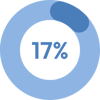 These are crisis buyers. 59% of companies in this profile already have a system in place. Yet their average number of pain points is 4.3, higher than all other personas in this report. With a failing system, these companies are not dealing with one category of problems. They are dealing with all of them simultaneously.
| Metric | Value |
|---|---|
|
Average Pain Points |
4.3 |
|
Process Friction is Primary Pain Dimension |
41% |
|
Manual Processes |
94% |
|
Disconnected Systems |
76% |
|
No Scanning |
59% |
|
Scalability Concerns |
53% |
|
Location Management |
53% |
Table 15. Full System Breakdown Pain Dimension Distribution
53% of companies in this profile reported location management as a leading challenge in their warehouse (Table 15). This gap is representative of two related but distinct conditions: difficulty tracking where inventory lives within a warehouse and difficulty knowing which physical site holds a given item across multi-location operations. Both situations can often co-exist, where a company without reliable bin-level tracking may also struggle to reconcile inventory across sites.
In this persona, location management can be a symptom of a wider system breakdown. Inaccurate receiving puts items in the wrong place. Without scanning, workers cannot reliably validate where they went. A disconnected ERP leaves the system of record out of step with the physical inventory. Each failure compounds the one before it.
Top Reported Priorities
The picking and packing workflow was one of the highest reported priorities of all personas at 71% (Table 16). When every upstream process is failing, the outbound workflow is where those inefficiencies become visible to the customer. A missed pick, a wrong item, or a delayed shipment is not just an internal challenge. It is the moment the operation's breakdown reaches the people it serves.
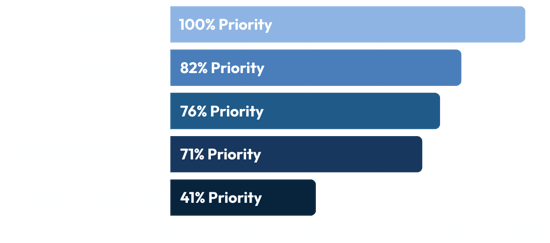
Table 16. Distribution of Sample Priority
Complexity Distribution
65% of Full System Breakdown companies operate at an L1 or L2 complexity level (Table 17). A lower complexity rating might suggest a less demanding operation with fewer points of failure. As the Hidden Warehouse Complexity framework establishes, that logic does not hold. A small company with perishable goods, lot tracking requirements, and multi-channel fulfillment can be experiencing deeper challenges than a larger operation that simply needs to scale.
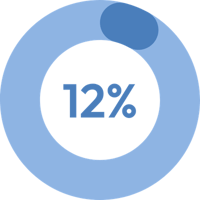 12% L1 Basic |
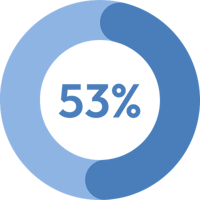 53% L2 Standard |
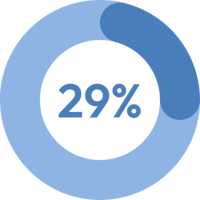 29%
L3 Moderate |
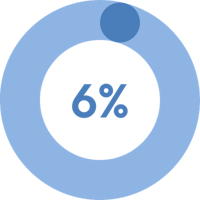 6% L4 Complex |
Table 17. Full System Breakdown Warehouse Complexity Distribution
Representative Archetype
The signals here point to simultaneous active failures across multiple operational dimensions, an existing system that cannot keep pace, and urgency driven by both customer-facing impact and compliance exposure at the same time.
A typical Full System Breakdown company is a food manufacturer processing 300 orders daily across Amazon, Shopify, and B2B channels. A recent ERP transition left lot tracking at 15 seconds per line item, with FIFO violations causing expired product write-offs and an FDA compliance requirement for lot traceability the operation cannot currently produce. The evaluation is not exploratory. It is urgent.
 The SMB Warehouse Operations Gap
The Five Levels of Warehouse Complexity
Hidden Complexity & Pain Dimensions

The Four Warehouse Operator Profiles Defined by What's Breaking
Profile 1: Analog Operator
Profile 2: Throughput Ceiling
Profile 3: Regulated OperatorProfile 4: Full System Breakdown
Why Warehouse Management Systems Fail
Download the PDF