
 The SMB Warehouse Operations Gap
The Five Levels of Warehouse Complexity
Hidden Complexity & Pain Dimensions
The Four Warehouse Operator Profiles Defined by What's Breaking
Profile 1: Analog Operator
Profile 2: Throughput Ceiling
Profile 3: Regulated Operator
Profile 4: Full System Breakdown

Why Warehouse Management Systems Fail
The Prior Technology Gap
46 of the 100 SMB companies in this sample arrived with prior warehouse technology in place. These were not operations starting from scratch. They were companies that invested in a WMS, barcode scanning system, or other warehouse technology, yet the investment did not resolve the operational problem it was implemented to solve.
Across the broader sample, manual processes, disconnected systems, and other forms of operational pains points remained. This raises the central question: if these operations recognized a warehouse problem and invested in technology, why are they looking to replace or supplement the systems they had already purchased?
The findings that follow examine where those investments fell short and why the underlying warehouse gap remained.

The Prior Technology Failure Landscape
Across this segment, each company arrived at the same decision point: their existing warehouse technology was no longer sufficient for the operation. The reasons behind the decision, however, were not uniform.
Table 19 organizes the prior-technology gap into four distinct failure patterns observed across the sample.
| Failure Pattern | Companies | % of Prior Technology |
|---|---|---|
| WMS lacks required functionality | 30 | 65% |
|
Deployed but bypassed by workers |
8 | 17.4% |
|
Hardware purchased without WMS software |
5 | 10.9% |
|
Implementation degraded operations |
3 | 6.5% |
Table 19. The Four Failure Patterns

The Risk of Complexity Misclassification
The most common failure pattern among the 46 companies with prior warehouse technology was insufficient functionality. 65% were seeking a replacement because their existing WMS could not support the requirements of their operation.
|
65% of Companies are Seeking a WMS |

According to Gartner’s Use the 10 Dimensions of Warehouse Complexity Before Selecting a WMS, failing to align WMS functionality with operational complexity can lead to one of two outcomes: overspending on an overly sophisticated system or underperforming because the system lacks required capabilities. The findings in this sample reflect the second outcome. The system was in place, but it could not support the specific workflows and controls required on the warehouse floor.
This risk is particularly relevant in the SMB market, where revenue and headcount are often used to define the size of the business. Those measures are useful for market segmentation, but they do not fully describe what a warehouse must manage. When the 100 companies in this sample were classified using an adaptation of Gartner’s five-level Warehouse Complexity Index, based on operational signals including location count, channel complexity, tracking requirements, and regulatory obligations, 79% operated at L2 Standard complexity or above.
|
79% of Companies Operated at L2 Standard Complexity or Above |

An operation can appear small at the company level while still requiring capabilities such as cycle counting, batch picking, EDI integration, location control, or lot and serial traceability. When technology is selected for the apparent size of the business rather than the operational requirements of the warehouse, it may fit the company on paper while failing to support the work performed on the floor. This is the central risk of Hidden Warehouse Complexity.

Additional Technology Failure Patterns
The remaining 35% of companies with prior warehouse technology experienced less prevalent but still consequential failure patterns.
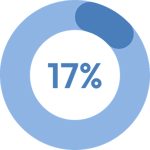
In 17% of operations, the technology investment was not used due to the lack of user adoption. In warehouse operations, a system with too many clicks or long lag times is likely to be abandoned. Workers revert to the paper logs and pick lists that allow them to finish tasks in less time. This is not necessarily a training issue. It is a design flaw. Without user experience and practicality in mind, a system is less likely to be adopted by the people who rely on it most.
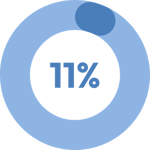
11% of prior-install companies encountered a common misconception in the supply chain industry: purchasing hardware alongside an ERP provides WMS functionality. What they soon discovered was that without WMS software connecting the hardware to the ERP, there is nothing directing, validating, or connecting the scan event to an ERP transaction in real time. With nothing to bridge that gap, the hardware investment becomes stranded until the software is purchased.

Lastly, 7% of prior-install companies reported a system that was deployed to solve challenges but actively made things worse. While this is the smallest failure pattern in this segment, it is arguably one of the most damaging. These operations invested with the expectation of improvement, but performance issues introduced delays into previously acceptable processes. The downstream effect is organizational resistance. A team that lived through a degraded implementation carries that experience into every future technology conversation, making the next investment harder to evaluate and harder to sell internally.
The Integration Gap: When Technology Does Not Connect the Warehouse to the ERPThe hardware-without-WMS-software pattern is one clear example of a wider integration gap. Across the full sample, 77% of companies identified integration as a core operational requirement for their future WMS solution. In parallel, 68% of companies reported a current inability to exchange data between warehouse activity and the ERP in real time. This disconnect was the second most common operational condition after manual processes. The gap may have resulted from absent software, a failed integration, or processes that still depended on employees to bridge warehouse activity and the ERP manually.
Together, these findings show that integration is foundational infrastructure for many SMB warehouse operations, rather than a secondary capability to consider after a warehouse system is in place. When the warehouse and ERP operate independently, employees must bridge the gap manually. |


|
Receipts, picks, transfers, and inventory counts may occur on the warehouse floor, but the system of record is not updated as work happens. Teams must then enter transactions after the fact, reconcile records across systems, or rely on paper and spreadsheets to maintain inventory data. Without a reliable connection between warehouse activity and the ERP, the investment can leave several operational gaps in place, including delayed inventory updates, duplicate entry, incomplete visibility, and a greater risk of fulfillment errors. Scanning hardware can capture a barcode, but it cannot direct warehouse work, validate a transaction, or update the ERP on its own. Those functions require a connected workflow that links physical activity on the floor to the system of record. The integration gap is therefore another reason technology fails in this market. A solution must not only support the workflows an operation requires. It must also maintain reliable transaction flow between the warehouse and the ERP. |

The SMB Warehouse Operations Gap
The Five Levels of Warehouse Complexity
Hidden Complexity & Pain Dimensions
The Four Warehouse Operator Profiles Defined by What's Breaking
Profile 1: Analog Operator
Profile 2: Throughput Ceiling
Profile 3: Regulated Operator
Profile 4: Full System Breakdown
Why Warehouse Management Systems Fail
Download the PDF